

Introduction
If you have recently searched for Tallyman Axis Bank, there is a good chance that you received a phone call, SMS, or email regarding an overdue loan or credit card payment. Many customers become confused after hearing the word “Tallyman” because it is unfamiliar and does not appear as a regular banking service. Some people even assume it is a scam or a third-party recovery company. In reality, Tallyman is an internal collection and recovery management system used by Axis Bank to organize and monitor overdue accounts.
Whenever a customer misses a loan EMI, credit card payment, or another repayment obligation, the bank’s collection process begins. Instead of manually handling thousands of overdue accounts, Axis Bank uses the Tallyman platform to track customer payment status, assign collection cases, monitor communication, and update recovery activities. The system allows bank employees and authorized recovery agencies to work efficiently while ensuring that every customer interaction is properly recorded.
Understanding how Tallyman Axis Bank works can help customers respond appropriately, avoid unnecessary stress, and protect their credit score. This guide explains everything in simple language, including why you receive Tallyman calls, how the recovery process works, whether it is safe, who can access the system, and what steps you should take if you receive a recovery call.
Table of Contents
What is Tallyman Axis Bank?
Tallyman Axis Bank is a specialized loan collection and recovery management system used internally by Axis Bank to monitor overdue loan and credit card accounts. It is not a separate financial institution, mobile application for customers, or public banking service. Instead, it functions as a centralized platform that enables the bank to manage the complete recovery lifecycle whenever customers fail to make payments on time.
The system automatically tracks overdue accounts and assigns them to collection teams based on various parameters such as repayment history, overdue duration, loan type, customer profile, and geographical location. This helps the bank manage thousands of accounts efficiently while maintaining complete records of customer communication and recovery activities.
Whenever a customer misses payments for products such as personal loans, home loans, vehicle loans, education loans, business loans, or credit cards, the account may eventually become part of the Tallyman workflow. The purpose is not to punish customers but to ensure timely communication and increase the chances of recovering overdue payments before the situation becomes more serious.
In simple terms, Tallyman is a backend recovery management platform that helps Axis Bank organize and monitor overdue payment cases in an efficient and structured manner.
Why Do You Receive Tallyman Axis Bank Calls?
Receiving a call from someone mentioning Tallyman Axis Bank usually means that your account has entered the bank’s collection process due to an overdue payment. These calls are generally intended to remind customers about pending dues and discuss possible repayment options.
Missed EMI Payments
One of the most common reasons customers receive Tallyman calls is because they have missed one or more Equated Monthly Installments (EMIs). Even a single missed installment may cause the account to be flagged for follow-up communication, especially if payment remains outstanding after the due date.
Credit Card Outstanding Balance
Customers who fail to pay their full credit card bill or even the required minimum amount may also receive calls from the recovery team. Credit card accounts are continuously monitored, and unpaid balances can quickly move into collection workflows.
Payment Not Updated
There are situations where customers have already made the payment but continue receiving reminders. This may happen because of transaction processing delays, technical errors, banking holidays, failed payment confirmations, or delayed synchronization between payment systems. In such cases, customers should immediately share proof of payment with Axis Bank for verification.
Long-Term Outstanding Dues
When payments remain overdue for several billing cycles, the account gradually moves into higher-risk categories. At this stage, recovery activities become more frequent and structured, which may include regular phone calls, emails, SMS reminders, or even field visits depending on the severity of the default.
Is Tallyman Axis Bank a Scam?
No. Tallyman Axis Bank is not a scam. It is an official recovery and collections management system used internally by Axis Bank to monitor overdue accounts and coordinate collection activities.
However, customers should remain cautious because fraudsters sometimes pretend to be recovery agents. Fake callers may claim to represent Axis Bank or Tallyman in an attempt to steal sensitive financial information.
A genuine recovery representative will usually verify your account details, explain the pending dues, and request repayment through official banking channels. They will never ask you to disclose confidential information such as your OTP, ATM PIN, debit card CVV, internet banking password, UPI PIN, or mobile banking credentials.
Whenever you are uncertain about the authenticity of a recovery call, disconnect the conversation and contact Axis Bank directly through its official customer care number or by visiting your nearest branch.
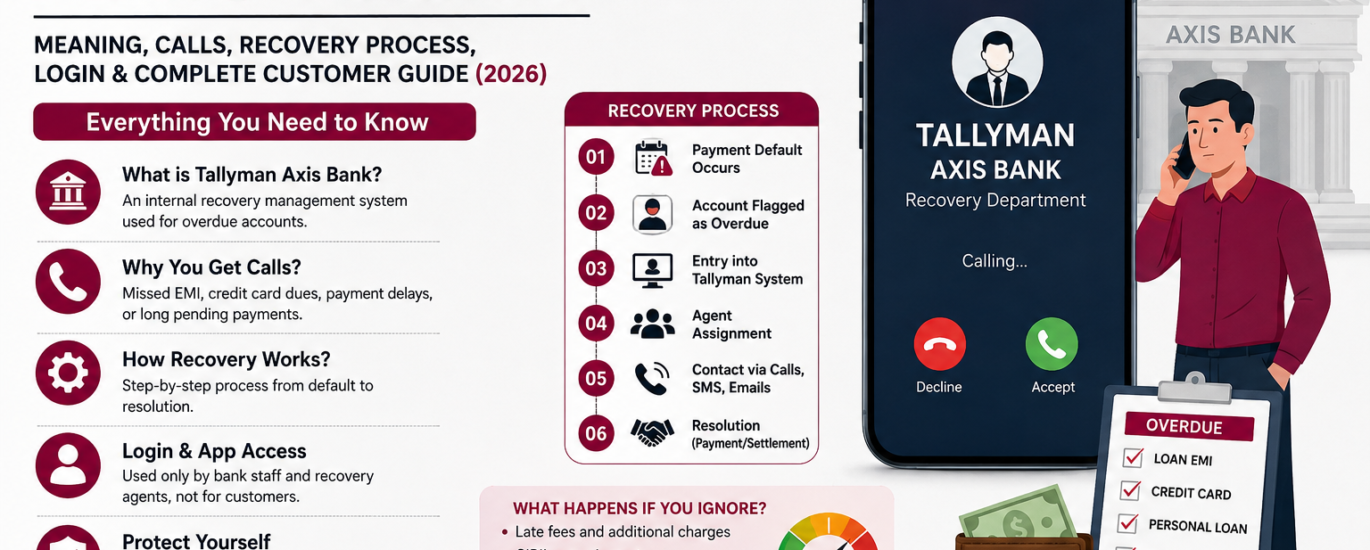
How the Tallyman Axis Bank Recovery Process Works
Understanding the recovery workflow helps customers know what happens after a payment default and why communication from the bank increases over time.
Step 1: Payment Default
The process begins when a customer misses an EMI, loan installment, or credit card payment. Initially, the bank simply records that the scheduled payment has not been received.
Step 2: Account Becomes Overdue
Once the due date passes without payment, the account is categorized as overdue. The bank classifies the account according to the number of Days Past Due (DPD), which helps determine the seriousness of the default.
Step 3: Transfer to Tallyman System
The overdue account is automatically transferred into the Tallyman collection platform, where it becomes visible to authorized recovery personnel. The system creates a recovery case and begins tracking future communication.
Step 4: Recovery Agent Assignment
Based on customer location, loan category, repayment history, overdue amount, and risk profile, the system assigns the account to an appropriate collection executive or recovery team.
Step 5: Customer Communication
Recovery representatives begin contacting customers through phone calls, SMS notifications, emails, or official letters. Their primary objective is to remind customers about outstanding dues and encourage repayment before the account deteriorates further.
Step 6: Resolution
The recovery case remains active until one of several outcomes occurs. The customer may pay the outstanding balance in full, request loan restructuring, negotiate a settlement where applicable, or enter another repayment arrangement approved by the bank. Once the issue is resolved, the recovery case is updated and eventually closed within the system.
Tallyman Axis Bank Login
Many people search online for “Tallyman Axis Bank Login” believing there is a customer portal. In reality, no public login exists.
The Tallyman platform is designed exclusively for authorized Axis Bank employees and approved recovery agencies. Customers cannot create accounts, access dashboards, or monitor recovery cases through this system.
Bank staff use the platform to monitor overdue accounts, record customer conversations, schedule follow-up actions, update repayment status, allocate recovery tasks, and generate collection reports. Every interaction with customers is documented to maintain transparency and ensure that collection procedures follow internal banking policies.
Tallyman Axis Bank App
The Tallyman application is also intended only for internal use. It is generally installed on the devices used by authorized recovery executives who work both in offices and in the field.
The application enables recovery agents to update customer visits, record repayment commitments, upload documents, monitor assigned cases, receive new recovery tasks, and synchronize information with the bank’s central database in real time.
Since the application contains confidential banking information and internal operational tools, it is not publicly available for download through the Google Play Store or Apple App Store.
Tallyman Axis Bank Salary
Many job seekers search for information regarding Tallyman Axis Bank salary because collection and recovery positions are regularly offered by banks and collection agencies.
Salary levels vary depending on experience, city, employer, and performance incentives. Entry-level collection executives generally earn between ₹15,000 and ₹22,000 per month. Experienced recovery officers often receive salaries ranging from ₹22,000 to ₹30,000, while team leaders may earn between ₹30,000 and ₹45,000. Recovery managers and senior collection professionals can receive salaries ranging from ₹45,000 to ₹70,000 or even higher depending on their responsibilities and organization.
Apart from fixed salaries, many collection professionals receive performance-based incentives linked to recovery targets, successful collections, and overall team performance.
Axis Bank Collection Process
Axis Bank follows a structured recovery framework that gradually increases in intensity as payment delays continue.
Early Collection Stage (1–30 Days)
During the initial stage, customers generally receive polite payment reminders through SMS, email, automated calls, or customer service representatives. The objective is simply to remind customers that payment has become overdue.
Mid Collection Stage (30–90 Days)
If payment is still not received, the account becomes part of the structured recovery workflow managed through Tallyman. Recovery executives begin contacting customers more frequently to discuss repayment options and encourage early resolution.
Advanced Recovery Stage (90+ Days)
Accounts remaining unpaid for extended periods may enter advanced recovery stages. Depending on bank policy and regulatory guidelines, this stage can include field visits by authorized representatives, settlement discussions, loan restructuring opportunities, or legal review where applicable. Banks generally prefer resolving issues through communication rather than legal action, making customer cooperation extremely important.
What Happens If You Ignore Tallyman Calls?
Ignoring recovery calls does not eliminate the outstanding debt. Instead, it may increase financial and credit-related consequences over time.
Late payment charges and additional interest may continue accumulating according to the loan agreement. Your repayment history may also be reported to credit bureaus, which can negatively affect your CIBIL score. A lower credit score may reduce your chances of obtaining future loans, credit cards, or favorable interest rates.
In cases involving long-term defaults, recovery communication may become more frequent. Authorized field representatives may visit your registered address, and the account could eventually proceed toward legal recovery procedures if no resolution is achieved. Responding to the bank and discussing repayment options early often prevents unnecessary escalation.
How to Handle Tallyman Axis Bank Calls
Verify the Identity of the Caller
Always request the caller’s name, employee identification number, department, and agency details. If you have any doubts, contact Axis Bank directly to confirm whether the caller is genuine.
Review Your Loan or Credit Card Account
Check your account statement carefully to verify the outstanding balance, payment due date, and recent transactions. Sometimes misunderstandings occur because of delayed payment updates.
Discuss Repayment Options
If the outstanding amount is correct but immediate payment is difficult, communicate openly with the bank. Depending on your financial circumstances, the bank may discuss restructuring options, revised repayment schedules, or settlement possibilities where permitted.
Protect Your Personal Information
Never share confidential information such as OTPs, ATM PINs, internet banking passwords, debit card CVV numbers, or UPI PINs with anyone claiming to be a recovery representative. Genuine bank officials will never request these details.
Tallyman Axis Bank vs Fraud Calls
Understanding the difference between genuine recovery calls and fraudulent calls is essential for protecting your finances.
A genuine Axis Bank recovery representative usually knows your loan account details, overdue amount, repayment schedule, and registered customer information. They identify themselves professionally and encourage payment through official banking channels.
Fraud callers, on the other hand, often create unnecessary panic by demanding immediate payment while requesting confidential information such as OTPs, PINs, passwords, or remote access to your mobile device. They may threaten immediate legal action without proper verification and refuse to provide official identification. Customers should immediately disconnect such calls and report them to Axis Bank.
Does Tallyman Affect Your Credit Score?
The Tallyman system itself does not directly reduce your credit score. However, the overdue payments that are tracked within the system may eventually be reported to credit bureaus if they remain unresolved.
Payment history is one of the most significant factors influencing your CIBIL score. Regularly missing EMIs or credit card payments can lower your credit rating, making it more difficult to obtain future loans or credit cards. Therefore, addressing overdue payments promptly is always beneficial for maintaining a healthy financial profile.
Benefits of the Tallyman System for Axis Bank
Although customers usually associate Tallyman with recovery calls, the platform also offers several operational advantages for the bank. It centralizes all overdue accounts in one place, improves coordination among collection teams, reduces manual errors, enables better case prioritization, maintains complete communication records, generates performance reports, and ensures that recovery activities follow internal banking policies and regulatory requirements. By automating routine collection tasks, the system allows recovery teams to focus more effectively on customer communication and resolution.
Frequently Asked Questions
What is Axis Bank Tallyman?
Axis Bank Tallyman is an internal recovery and collections management system used by the bank to track overdue loans, credit cards, and other repayment obligations.
Why am I receiving Tallyman Axis Bank calls?
These calls usually indicate that your loan EMI, credit card bill, or another repayment has become overdue or has not yet been updated in the bank’s system.
Can customers log in to Tallyman?
No. The platform is available only to authorized Axis Bank employees and approved recovery agencies. Customers cannot access it directly.
Can I stop Tallyman calls?
Yes. The most effective way to stop recovery calls is to clear your outstanding dues or communicate with the bank regarding repayment plans, restructuring, or other approved solutions.
Is the Tallyman app available for customers?
No. The application is designed exclusively for internal banking staff and recovery executives and is not available for public use.
Can overdue payments affect future loan approvals?
Yes. Continuous missed payments may negatively affect your credit history and CIBIL score, which can reduce the chances of future loan approvals or result in higher interest rates.
Conclusion
Tallyman Axis Bank is an important part of the bank’s internal credit recovery infrastructure rather than a separate financial service or public application. It helps the bank monitor overdue accounts, organize recovery activities, assign collection responsibilities, and maintain complete records of customer interactions throughout the repayment process.
Receiving a Tallyman-related call does not necessarily mean that legal action is imminent. In many cases, it simply indicates that your account requires attention due to delayed payments or pending dues. Responding promptly, verifying account details, communicating honestly with the bank, and resolving outstanding payments as early as possible can prevent further escalation and help protect your credit profile.
Understanding how the Tallyman system operates allows customers to approach recovery communications with confidence instead of confusion. By staying informed, verifying every call, and cooperating with the bank when genuine payment issues arise, most repayment situations can be resolved efficiently while minimizing financial stress and preserving long-term credit health.