Introduction: InfluencersGoneWild
The internet has transformed the way people create and consume content. Social media influencers, content creators, streamers, and digital personalities now reach millions of followers across platforms such as Instagram, TikTok, YouTube, and X (formerly Twitter). Alongside this rapid growth, numerous websites and online communities have emerged that collect, discuss, or redistribute content related to influencers.
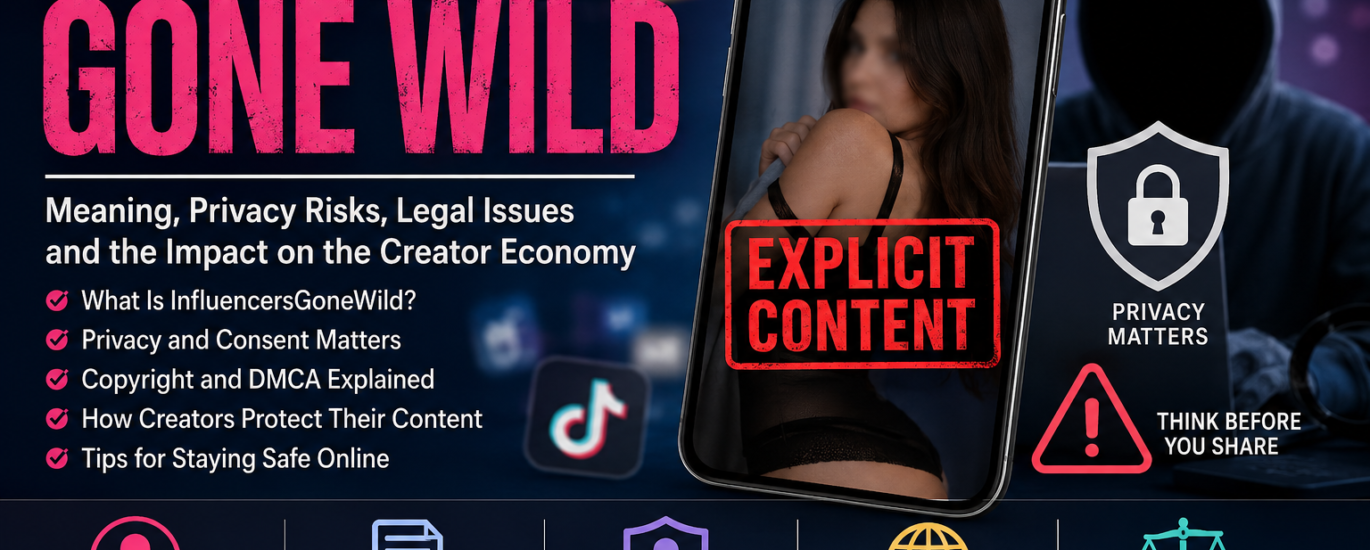
One term that frequently appears in online searches is InfluencersGoneWild. Depending on the context, it may refer to a specific website or be used more generally to describe online discussions involving influencers and explicit or controversial content. Many people search for this keyword simply because they want to understand what it means, whether the platform is legitimate, and what privacy or legal issues are associated with it.
This guide provides a factual, educational overview of InfluencersGoneWild. It explains the term, discusses how creator platforms have evolved, examines copyright and privacy concerns, explores the responsibilities of both creators and viewers, and highlights best practices for staying safe online.
Whether you are a casual internet user, a content creator, a student, or someone researching digital media trends, understanding the broader issues surrounding this topic is increasingly important in today’s online world.
Table of Contents
What Does InfluencersGoneWild Mean?
The phrase InfluencersGoneWild is commonly associated with an adult-oriented website that aggregates or links to explicit content involving online influencers and creators. In some cases, people also use the term more broadly when referring to viral controversies, leaked media, or discussions surrounding influencer content.
It is important to understand that the phrase itself does not describe a particular category of influencers. Instead, it has become associated with online communities that focus on adult material involving public figures from social media.
Many internet users encounter the name through:
- Search engine results
- Online forums
- Social media discussions
- Recommendation algorithms
- News coverage related to online privacy
Not every creator mentioned in these discussions participates willingly. This distinction is essential because online content may be shared with permission, redistributed without permission, or even be completely unrelated to the individual being discussed.
Why Is the Term So Popular?
Interest in InfluencersGoneWild reflects several broader internet trends rather than one single reason.
Curiosity About Internet Culture
People naturally become curious when they encounter unfamiliar website names or trending keywords. Viral discussions often generate additional searches, even among users who simply want to understand what the platform is.
Growth of the Creator Economy
The creator economy has expanded dramatically over the past decade. Millions of individuals now earn income by producing online content, whether through sponsorships, advertising revenue, subscriptions, merchandise, or fan support.
As creators gain larger audiences, public interest in their personal lives often increases as well.
Search Engine Trends
Popular search terms frequently appear because users are looking for:
- Definitions
- News
- Safety information
- Legal questions
- Privacy concerns
High search volume does not necessarily indicate endorsement of a website or its practices.
The Rise of Digital Content Creators
To understand why platforms like InfluencersGoneWild attract attention, it helps to understand how online content creation has evolved.
A decade ago, many influencers focused primarily on:
- Lifestyle blogging
- Fashion
- Gaming
- Travel
- Photography
- Beauty tutorials
Today, creators monetize content through numerous channels including:
Brand Partnerships
Companies collaborate with creators to promote products and services.
Advertising Revenue
Platforms such as YouTube share advertising income with eligible creators.
Fan Memberships
Many creators offer exclusive content through subscription services where users voluntarily pay for additional material.
Merchandise
Selling branded products has become a major income source for successful influencers.
The diversity of income streams has also created new challenges involving copyright, impersonation, piracy, and unauthorized redistribution.
Understanding Privacy in the Digital Age
One of the most important discussions surrounding InfluencersGoneWild is online privacy.
Many people mistakenly assume that being an influencer means giving up all privacy. In reality, creators retain the same legal and ethical rights as anyone else.
Privacy concerns include:
Unauthorized Sharing
Content may sometimes be copied and redistributed without permission.
Personal Information
Creators may face doxxing, where private information such as addresses or phone numbers is exposed.
Fake Accounts
Impersonation remains a common issue across social media platforms.
Edited or Misleading Content
Images and videos may be altered or presented without context, leading to misinformation.
These issues affect creators regardless of the type of content they produce.
Copyright and Intellectual Property
Copyright law plays an important role in digital content.
In most countries, creators automatically own copyright to original content they produce.
This generally includes:
- Original photographs
- Videos
- Artwork
- Written posts
- Music created by the author
Redistributing copyrighted material without permission may violate applicable copyright laws, depending on the jurisdiction and circumstances.
Many creators actively monitor the internet for unauthorized copies of their work.
What Is a DMCA Takedown?
One commonly discussed topic is the Digital Millennium Copyright Act (DMCA).
A DMCA takedown request allows copyright holders to request removal of infringing content from websites and online platforms that comply with applicable copyright procedures.
Typical steps include:
- Identifying copyrighted material.
- Locating unauthorized copies.
- Contacting the website or hosting provider.
- Submitting supporting evidence.
- Waiting for review.
Although the DMCA is a U.S. law, similar copyright mechanisms exist in many other countries.
Consent Matters
One of the most important ethical principles online is consent.
Consent means that individuals knowingly agree to how their content is created, distributed, and viewed.
Without consent, sharing someone’s private or copyrighted material may create legal and ethical concerns.
This principle applies regardless of whether someone is:
- An influencer
- A celebrity
- A private individual
- A student
- A business owner
Respecting consent helps create a healthier online environment.
Risks Associated with Unofficial Content-Sharing Websites
Many websites that redistribute content raise broader concerns beyond copyright.
Malware
Some websites contain misleading advertisements or malicious downloads.
Phishing
Fake login pages may attempt to steal passwords.
Scam Subscriptions
Users may encounter fraudulent payment requests.
Excessive Advertising
Aggressive pop-ups and redirects are common on some unofficial websites.
Data Collection
Certain sites may collect user information without clear disclosure.
These risks highlight the importance of practicing good online security.
How Creators Protect Their Work
Professional creators use several strategies to protect digital content.
Watermarks
Images and videos may contain visible branding.
Copyright Registration
Some creators formally register their work where applicable.
Monitoring Services
Specialized tools help identify unauthorized copies.
Platform Reporting
Most major social media platforms provide reporting mechanisms.
Legal Action
In serious cases, creators may pursue legal remedies through applicable laws.
The Role of Social Media Platforms
Major platforms increasingly invest in protecting creators and users.
Common safety measures include:
- Copyright reporting systems
- Identity verification
- Account recovery tools
- Content moderation
- Community guidelines
- Anti-impersonation policies
These systems continue evolving as online communities grow.
Ethical Responsibilities of Internet Users
Every internet user contributes to the digital ecosystem.
Responsible online behavior includes:
- Respecting copyright.
- Avoiding unauthorized sharing.
- Verifying information before reposting.
- Reporting harmful or illegal content when appropriate.
- Respecting privacy.
Small actions can collectively improve online communities.
Digital Reputation and Long-Term Consequences
Content shared online can remain accessible for years.
For creators, reputation influences:
- Brand partnerships
- Employment opportunities
- Audience trust
- Professional relationships
Likewise, users who post defamatory or infringing material may also face legal or platform consequences.
Thinking before posting benefits everyone.
How Search Trends Shape Online Visibility
Search engines often reflect public curiosity rather than approval.
Trending keywords may become popular because of:
- Breaking news
- Viral social media discussions
- Celebrity attention
- Algorithmic recommendations
As a result, high search volume should not be interpreted as a measure of credibility or trustworthiness.
Users should always evaluate information using reliable sources.
Tips for Staying Safe Online
Whether you are a creator or an everyday internet user, several best practices can improve online safety.
Use Strong Passwords
Unique passwords reduce the risk of unauthorized access.
Enable Two-Factor Authentication
An extra verification step significantly improves account security.
Verify Websites
Before entering personal information, confirm that a website is legitimate.
Avoid Suspicious Downloads
Unknown files may contain malware.
Review Privacy Settings
Social media platforms regularly update privacy controls.
Think Before Sharing
Once something is posted publicly, removing it completely may be difficult.
The Future of Online Content Protection
Technology continues to reshape digital media.
Several developments are expected to become increasingly important.
Artificial Intelligence
AI tools can identify copied content more efficiently.
Improved Copyright Detection
Automated systems continue improving content recognition.
Better Identity Verification
Platforms are introducing stronger verification processes.
Digital Watermarking
Invisible watermark technology is becoming more sophisticated.
Global Cooperation
Governments, technology companies, and creators continue working toward stronger online protections.
These developments aim to balance freedom of expression with privacy, copyright, and user safety.
Common Misconceptions About InfluencersGoneWild
Several misconceptions often appear in online discussions.
“Everything online is free to share.”
False. Copyright laws still apply to digital content.
“Influencers lose all privacy.”
No. Public figures retain important privacy and legal rights.
“Popular websites are automatically trustworthy.”
Popularity does not guarantee safety, accuracy, or legality.
“Deleting content removes it forever.”
Not necessarily. Copies may remain elsewhere on the internet.
Understanding these misconceptions helps users make more informed decisions online.
Why Media Literacy Matters
Media literacy is the ability to evaluate online information critically.
Important questions to ask include:
- Is the source reliable?
- Is the content authentic?
- Has permission been granted?
- Could the information be misleading?
- Does sharing this respect another person’s rights?
Developing these habits helps people navigate the internet responsibly.
Conclusion
InfluencersGoneWild is a term that many people encounter while exploring internet culture, social media, and the creator economy. Although often associated with an adult-oriented website, the broader discussion surrounding the term extends far beyond a single platform. It highlights important topics such as digital privacy, copyright protection, consent, cybersecurity, and responsible online behavior.
As online content creation continues to grow, creators and audiences alike share responsibility for maintaining a respectful digital environment. Understanding copyright laws, respecting consent, verifying information, and practicing good cybersecurity are all essential parts of responsible internet use.
Rather than focusing solely on viral trends or sensational content, users benefit most by approaching online information with curiosity, critical thinking, and respect for the rights of others. These principles contribute to a safer, more trustworthy, and more sustainable digital ecosystem for everyone.
Frequently Asked Questions (FAQs)
1. What is InfluencersGoneWild?
InfluencersGoneWild is commonly associated with an adult-oriented website and is also used as a broader internet term in discussions involving influencer-related explicit or controversial content.
2. Is content shared on unofficial websites always authorized?
No. Some material may be shared with permission, while other content may be redistributed without authorization. Users should avoid assuming that all content is legitimately published.
3. Why is the keyword InfluencersGoneWild so popular?
The term attracts attention because of online curiosity, viral discussions, influencer culture, and broader conversations about privacy, copyright, and digital media.
4. How can creators protect their online content?
Creators commonly use watermarks, copyright protections, monitoring services, platform reporting tools, identity verification, and legal remedies where appropriate.
5. Why is consent important online?
Consent ensures that individuals control how their personal or creative content is shared and distributed. Respecting consent supports privacy, trust, and ethical online behavior.
6. What can internet users do to stay safe?
Users should enable two-factor authentication, use strong passwords, avoid suspicious websites and downloads, verify information before sharing, and respect copyright and privacy rights.