

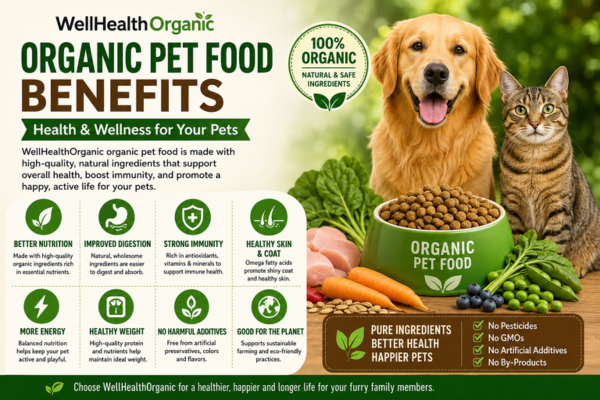
Introduction
As pet owners become more aware of the importance of nutrition, organic pet food has emerged as a preferred choice for those who want to provide the best possible care for their furry companions. Just as people are choosing organic fruits, vegetables, and natural foods for themselves, many are extending the same philosophy to their pets. The concept behind WellHealthOrganic Organic Pet Food Benefits is simple—feeding pets wholesome, chemical-free, and nutrient-rich food that supports long-term health and overall well-being.
Organic pet food is prepared using ingredients that are grown and processed without synthetic pesticides, artificial fertilizers, genetically modified organisms (GMOs), or harmful chemical preservatives. Instead, it focuses on natural farming methods and premium-quality ingredients that help maintain a pet’s physical health while supporting environmental sustainability. Whether you own a playful puppy, an energetic adult dog, a curious kitten, or a senior cat, choosing the right nutrition can have a lasting impact on their quality of life.
This comprehensive guide explains everything you need to know about WellHealthOrganic Organic Pet Food Benefits, including its nutritional advantages, health benefits, safety measures, comparison with conventional pet food, and tips for selecting the best organic food for your beloved pets.
Table of Contents
What is Organic Pet Food?
Organic pet food is made from ingredients produced according to strict organic farming standards. Unlike conventional pet food, organic formulas avoid the use of synthetic pesticides, chemical fertilizers, antibiotics for growth promotion, genetically modified ingredients, and artificial preservatives. Every ingredient used in certified organic pet food undergoes careful inspection to ensure it meets established quality standards.
The primary goal of organic pet food is to provide pets with clean, balanced nutrition while reducing their exposure to unnecessary chemicals. Organic meat comes from animals raised under humane conditions with organic feed, while fruits, vegetables, and grains are cultivated naturally without harmful agricultural chemicals.
Because of these standards, organic pet food often contains higher-quality proteins, healthier fats, and naturally occurring vitamins and minerals that contribute to better overall health.
Key Characteristics of Organic Pet Food
| Characteristic | Organic Pet Food | Conventional Pet Food |
|---|---|---|
| Ingredients | Free from pesticides, GMOs, and synthetic chemicals | May contain chemical residues and GMOs |
| Protein Source | High-quality organic meat | Often includes meat by-products |
| Preservatives | Natural preservatives only | Artificial preservatives may be used |
| Digestibility | Highly digestible | May contain fillers |
| Omega-3 Fatty Acids | Naturally higher | Usually lower |
| Allergens | Fewer artificial allergens | More common allergens |
| Environmental Impact | Eco-friendly farming | Higher environmental impact |
Why Organic Pet Food is Becoming More Popular
Pet owners today are increasingly viewing their pets as family members. This shift has encouraged people to invest in healthier diets that support longer, happier lives for their animals. Growing awareness about artificial additives, preservatives, and chemical exposure has also encouraged many consumers to switch to organic alternatives.
Many veterinarians recommend premium-quality diets for pets suffering from food sensitivities, digestive disorders, obesity, or skin allergies. Although organic food is not a cure for medical conditions, high-quality nutrition often supports better overall health and recovery.
Nutritional Comparison Between Organic and Conventional Pet Food
Understanding the nutritional differences helps pet owners make informed choices regarding their pet’s diet.
| Nutritional Factor | Organic Pet Food | Conventional Pet Food |
|---|---|---|
| Ingredients | Premium organic ingredients | Lower-quality ingredients may be used |
| Nutritional Value | Rich in vitamins and minerals | May contain fewer natural nutrients |
| Artificial Additives | None | Often includes colors and preservatives |
| Flavor | Natural taste | Artificial flavor enhancers may be used |
| Protein Quality | High | Moderate to low |
| Digestibility | Excellent | Moderate |
Health Benefits of WellHealthOrganic Organic Pet Food
Better Overall Nutrition
One of the biggest advantages of organic pet food is its exceptional nutritional quality. Organic ingredients retain more natural vitamins, antioxidants, and minerals because they are produced without harsh chemical treatments. High-quality proteins, healthy fats, whole grains, fruits, and vegetables work together to provide complete and balanced nutrition.
Proper nutrition supports healthy muscles, stronger bones, improved metabolism, and better organ function throughout every stage of your pet’s life.
Improved Digestive Health
Many pets experience digestive problems due to low-quality fillers, artificial ingredients, and preservatives found in conventional pet foods. Organic pet food generally contains fewer unnecessary fillers and relies on natural ingredients that are easier for pets to digest.
Improved digestion often leads to healthier bowel movements, reduced stomach discomfort, better nutrient absorption, and fewer digestive disturbances such as vomiting or diarrhea.
Healthier Skin and Shinier Coat
A pet’s skin and coat often reflect its overall health. Organic pet foods usually contain natural sources of Omega-3 and Omega-6 fatty acids, which nourish the skin and promote a soft, glossy coat.
Many owners notice reduced itching, less shedding, fewer hot spots, and improved skin hydration after switching to premium organic diets.
Stronger Immune System
Organic foods naturally contain antioxidants, vitamins, and minerals that help strengthen the immune system. A stronger immune response enables pets to better defend themselves against infections, inflammation, and various illnesses.
A healthy immune system also contributes to faster recovery from minor health issues and supports overall vitality.
Reduced Risk of Food Allergies
Artificial colors, preservatives, flavor enhancers, and low-quality fillers are common triggers for food allergies in many pets. Organic pet foods eliminate many of these ingredients, making them suitable for pets with sensitive digestive systems or food intolerances.
Although every pet is different, many owners report noticeable improvements in itching, ear infections, digestive upset, and skin irritation after changing to organic diets.
Increased Energy Levels
Balanced nutrition plays a major role in maintaining healthy energy levels. Because organic pet food provides better-quality nutrients, pets often become more active, playful, and energetic without unnecessary weight gain.
Proper protein intake supports muscle development, while healthy fats provide sustained energy throughout the day.
Better Weight Management
Premium organic foods often contain fewer empty calories and more nutrient-dense ingredients. This allows pets to feel satisfied while maintaining a healthy body weight.
Maintaining an appropriate weight helps reduce the risk of diabetes, arthritis, heart disease, and other obesity-related health problems.
Improved Heart Health
Organic pet food often includes healthy fats from natural sources such as fish oil and flaxseed. These ingredients provide Omega-3 fatty acids that support cardiovascular function, reduce inflammation, and contribute to healthy blood circulation.
Healthy nutrition supports both heart health and overall longevity.
Features of WellHealthOrganic Organic Pet Food
Premium Organic Ingredients
Every ingredient is selected carefully to ensure maximum nutritional value. Organic meats, vegetables, fruits, and grains provide pets with clean and balanced nutrition.
Strict Quality Control
Quality assurance remains one of the strongest aspects of WellHealthOrganic products. Manufacturing processes follow rigorous standards to ensure safety, consistency, and nutritional integrity.
Sustainable Farming Practices
Organic farming avoids excessive chemical use while promoting soil health, biodiversity, and environmental conservation. Choosing organic products helps support environmentally responsible agriculture.
Naturally Rich in Nutrients
Because organic farming preserves soil quality, many ingredients naturally contain higher levels of vitamins, minerals, antioxidants, and healthy fats.
No Artificial Additives
Organic pet food excludes artificial colors, flavors, preservatives, and unnecessary chemical ingredients that may negatively affect long-term health.
Benefits at a Glance
| Benefit | Description |
|---|---|
| Improved Nutrition | Rich in essential nutrients |
| Better Digestion | Easier to digest naturally |
| Stronger Immunity | Supports immune health |
| Healthy Skin & Coat | Promotes shiny fur |
| Increased Energy | Encourages active lifestyle |
| Weight Management | Supports healthy body weight |
| Heart Health | Rich in healthy fatty acids |
| Allergy Support | Fewer artificial allergens |
Is WellHealthOrganic Organic Pet Food Safe?
Safety remains one of the biggest concerns for pet owners when introducing a new diet. Organic pet foods manufactured under recognized quality standards are generally considered safe when they meet complete and balanced nutritional requirements.
Quality manufacturers follow Good Manufacturing Practices (GMP), maintain strict hygiene during production, and regularly test products for contaminants, harmful bacteria, and nutritional accuracy.
However, every pet has unique nutritional needs. Puppies, kittens, senior pets, and animals with medical conditions may require specialized diets. Therefore, consulting your veterinarian before making major dietary changes is always recommended.
Advantages of Choosing Organic Pet Food
Higher Quality Ingredients
Organic foods contain carefully selected ingredients without unnecessary chemical additives.
Better Long-Term Health
Consistent high-quality nutrition may contribute to improved health throughout your pet’s lifetime.
Environmentally Friendly
Organic farming supports biodiversity, healthier soil, cleaner water, and reduced pollution.
Excellent Taste
Many pets find organic foods more flavorful because they contain real meat and natural ingredients rather than artificial flavor enhancers.
Fewer Harmful Chemicals
Reducing exposure to pesticides, herbicides, and artificial preservatives provides additional peace of mind for many pet owners.
Possible Disadvantages
Higher Cost
Organic ingredients require more expensive farming practices, making organic pet food generally more costly than conventional options.
Limited Availability
Depending on your location, certified organic pet food brands may not be available in every local pet store.
Gradual Transition Required
Pets should always transition slowly to a new food over 7–10 days to avoid digestive upset.
How to Choose the Right Organic Pet Food
Read the Ingredient List Carefully
Choose foods where real organic meat appears as the first ingredient. Avoid formulas containing excessive fillers or vague ingredient descriptions.
Look for Organic Certification
Certified organic labels indicate the product meets established standards for ingredient sourcing and manufacturing.
Match Your Pet’s Age
Puppies, kittens, adults, and senior pets all have different nutritional requirements. Choose age-appropriate formulas.
Consider Breed and Size
Large breeds, small breeds, and highly active pets often require specialized nutrition to support their unique needs.
Consult Your Veterinarian
If your pet has allergies, digestive problems, kidney disease, diabetes, or other medical conditions, seek professional veterinary advice before changing diets.
Tips for Transitioning to Organic Pet Food
Changing your pet’s food suddenly may lead to temporary digestive discomfort. Introduce the new food gradually by mixing it with the current diet over one to two weeks. Begin with a small percentage of organic food and slowly increase the amount each day while reducing the old food. Monitor your pet’s appetite, energy levels, stool quality, and overall behavior during the transition. Fresh drinking water should always be available, and any persistent digestive issues should be discussed with your veterinarian.
Conclusion
WellHealthOrganic Organic Pet Food represents a thoughtful approach to pet nutrition by emphasizing natural ingredients, balanced nutrition, and environmentally responsible farming practices. Organic pet food offers numerous potential benefits, including improved digestion, healthier skin and coat, stronger immunity, increased energy, better weight management, and reduced exposure to artificial chemicals. Although organic food often costs more than conventional alternatives, many pet owners consider the long-term health benefits well worth the investment.
Ultimately, every pet has unique nutritional needs, and the best diet is one that provides complete, balanced nutrition while supporting their individual health requirements. By selecting high-quality organic pet food and consulting with your veterinarian when necessary, you can help your beloved companion enjoy a healthier, happier, and more active life.
Frequently Asked Questions
What are the main WellHealthOrganic Organic Pet Food Benefits?
The major benefits include improved nutrition, healthier digestion, stronger immunity, better skin and coat health, increased energy levels, healthier weight management, and reduced exposure to artificial chemicals.
Is organic pet food better than conventional pet food?
Organic pet food generally contains higher-quality ingredients and avoids synthetic pesticides, artificial preservatives, and genetically modified ingredients. However, the best choice depends on your pet’s individual nutritional needs.
Is organic pet food suitable for all pets?
Most healthy dogs and cats can eat organic pet food, but pets with specific medical conditions should follow their veterinarian’s dietary recommendations.
Does organic pet food help with allergies?
Some pets with food sensitivities may experience fewer allergic reactions because organic foods usually contain fewer artificial ingredients and preservatives. However, allergies vary between individual animals.
Why is organic pet food more expensive?
Organic farming involves stricter production standards, higher-quality ingredients, sustainable agricultural practices, and certification costs, which increase the overall price of the product.